Operations platforms
Bring recurring work, tasks, documents, decisions and status into a structured operational environment.
Custom Web Applications for Business Operations
When generic software no longer fits the operation, I build custom web applications that bring workflows, data, business rules and integrations into one purpose-built system.
The operational problem
Custom web applications make sense when the process is specific enough that spreadsheets, plugins and off-the-shelf products have become a patchwork instead of a system.
What I build
I build around the workflow first, then choose the simplest architecture that can support it reliably and evolve with the business.
Bring recurring work, tasks, documents, decisions and status into a structured operational environment.
Create controlled external experiences connected directly to the internal workflow.
Combine catalogs, inventory logic, requests, approvals and operational handling in one application.
Connect reporting to the underlying workflow so visibility is part of the system, not a separate manual exercise.
Create useful interfaces over APIs, business data and automation instead of forcing users to work directly in backend tools.
Translate business states, ownership, rules and exceptions into software that guides the process.
When I’m usually brought in
A custom web application becomes valuable when users need to do something operational: manage records, move work through states, place orders, approve requests, coordinate with other roles or connect actions to real business data.
Spreadsheets, forms, email, shared drives and SaaS tools each carry one part of a workflow nobody can see end to end.
Employees, customers, suppliers or managers need a shared system with clear roles, permissions and views.
The application must validate rules, connect data and trigger actions — not simply display information.
Operations-first architecture
I do not begin by choosing a tool. I first understand what the operation needs to control, what can be deterministic, what needs judgment and where technology can remove friction without creating another fragile layer.
Map how work actually moves, including rules, exceptions and decisions.
Create the right structure for data, interfaces, permissions and business logic.
Connect systems and remove repetitive work that should not require manual effort.
Add intelligence where classification, extraction, reasoning or assistance creates real leverage.
Proof in practice
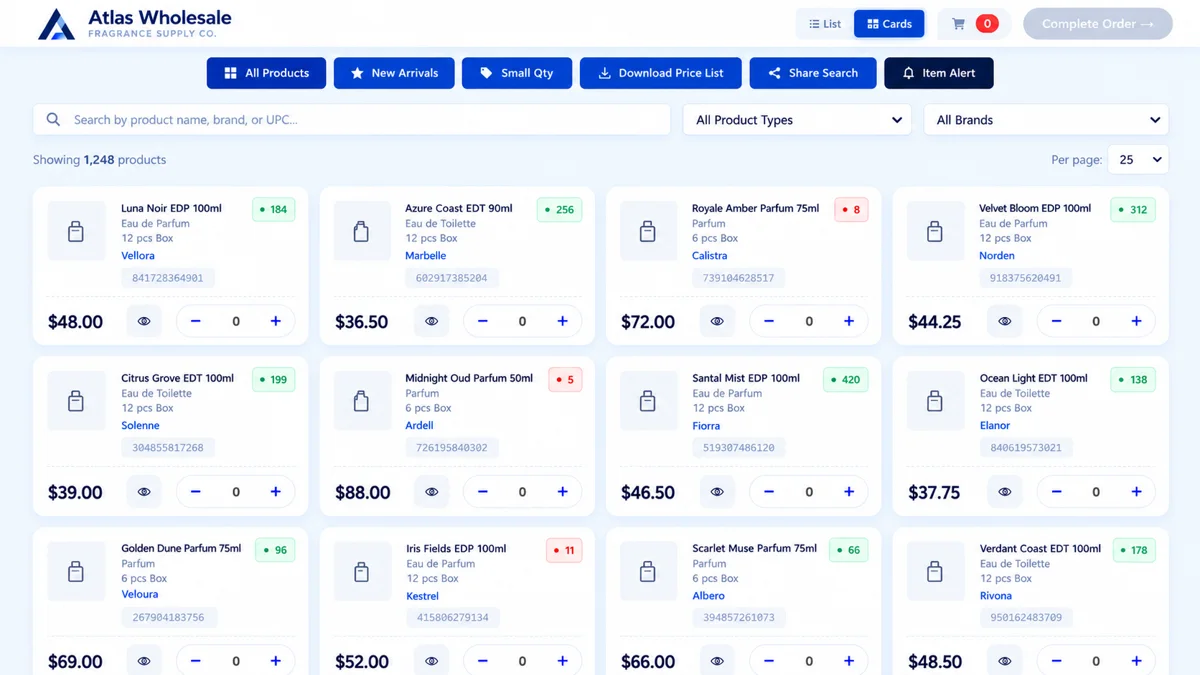
Catalog browsing, inventory checks and order requests were disconnected from the way customers actually placed orders. I designed a responsive B2B application with inventory validation, persistent cart logic and structured operational order handling.
Result: a clearer ordering experience for customers and a more controlled workflow behind the scenes.
Questions
A custom application becomes worth evaluating when the workflow is recurring, operationally important and increasingly constrained by spreadsheets or generic software.
Yes. A custom application can act as the interface or operational layer while existing services remain responsible for specific functions behind the scenes.
Architecture depends on the problem. My stack can include JavaScript, Google Apps Script, Python, Firebase/Firestore, REST APIs, n8n, Make and AI services.
Yes. I prefer to establish the smallest reliable operational core first, then add functionality based on actual use.
Yes. The application, data flow and automation are designed as one system when the workflow requires them to work together.
Start with the operation
Tell me where the operation is becoming difficult to control. You do not need a technical specification — the current workflow is enough to start.
Discuss your operation →